


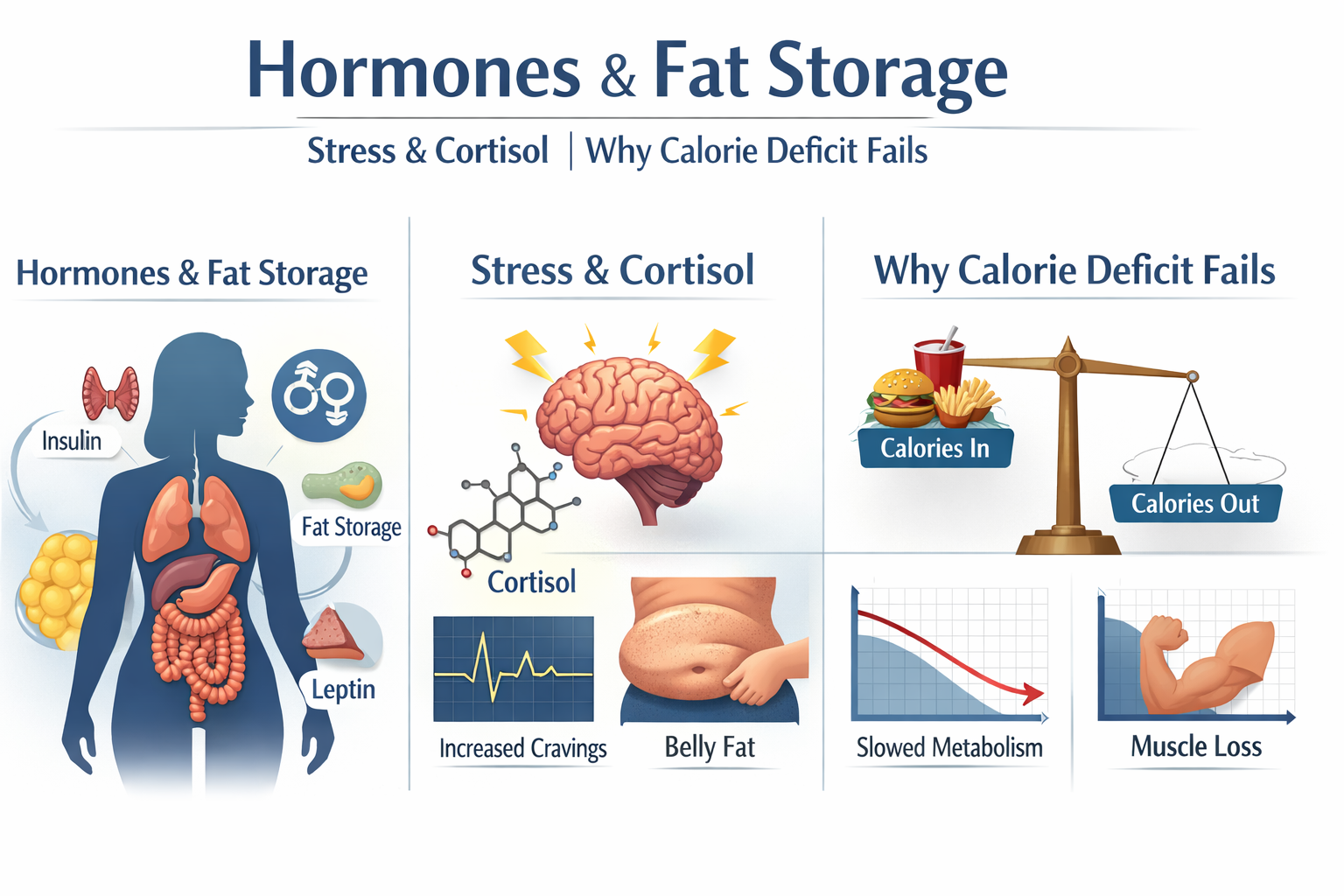
- Fat loss stops when hormones switch to fat-storage mode
- The biggest blockers are: insulin ↑, cortisol ↑, leptin ↓, ghrelin ↑, thyroid output ↓
- A calorie deficit fails when it is too aggressive, low in protein, high-stress, or poorly recovered
- Your body burns fat only when it feels safe, nourished, active, and well-rested
- Supplements help best when used strategically as support, not shortcuts
Hormones That Control Fat Storage
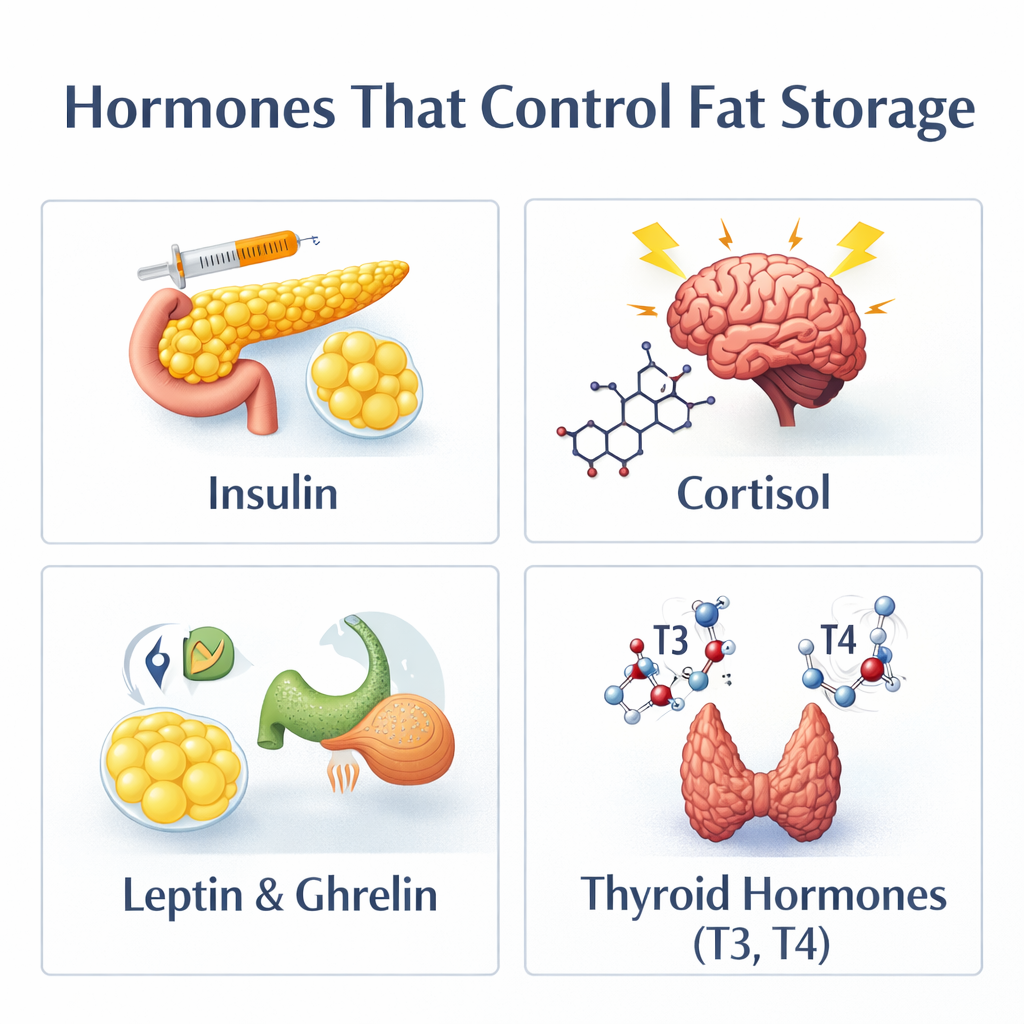
Your body uses hormones as switches to decide whether to store fat or burn fat.
1. Insulin
- Rises when meals contain sugar or refined carbs
- Signals the body to store energy as fat
- Blocks fat breakdown (lipolysis) if elevated for long periods
2. Cortisol
- The body’s main stress hormone
- Encourages belly fat storage (both visceral and subcutaneous)
- Increases cravings for quick-energy foods
- Can break down muscle for fuel, slowing metabolism
Support belly fat reduction without raising cortisol
3. Leptin & Ghrelin
| Leptin | Ghrelin |
| Signals fullness | Signals hunger |
| Supports fat burn | Increases cravings |
| Drops when sleep and calories are too low | Rises when sleep and stress are high |
Poor sleep and chronic stress → leptin decreases, ghrelin increases
4. Thyroid Hormones (T3, T4)
- Control how fast your metabolism works at rest (RMR)
- Long periods of very low calories reduce thyroid output
- Result: metabolism slows and fat burn reduces
Boost metabolism intelligently during workouts
When these hormones tilt toward storage, your body protects fat instead of burning it.
What Triggers Stress and Cortisol in Daily Life
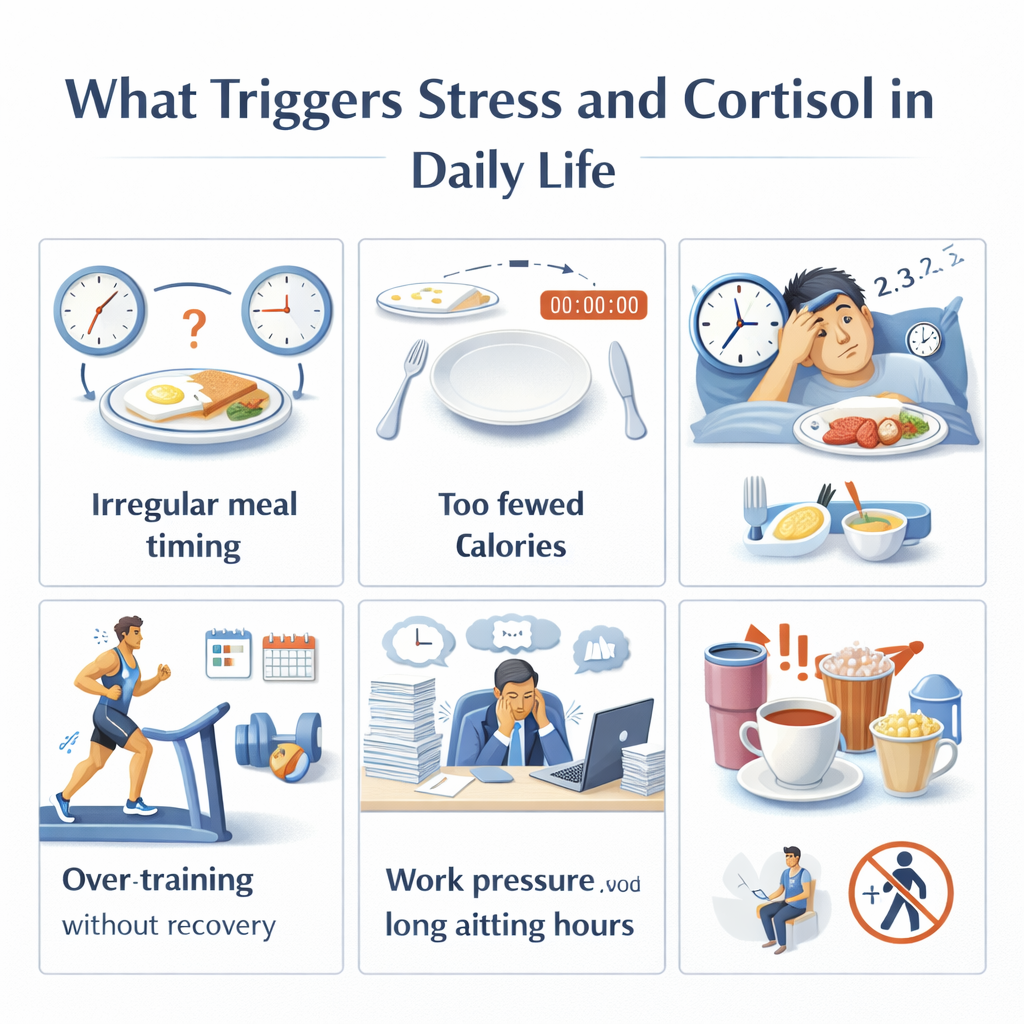
Stress is not only mental — it can be physiological (body stress) too.
Common stress triggers for Indians:
- Irregular meal timing
- Too few calories for too long
- Low protein intake
- Poor sleep (<7 hours)
- Over-training without recovery
- Work pressure and long sitting hours
- High sugar chai/coffee multiple times a day
- Excess caffeine without food balance
- Frequent snacking
- No NEAT movement
What cortisol does when stress is chronic:
- Stores fat around the abdomen
- Breaks down muscle
- Makes you feel tired but still hungry
- Causes water retention, hiding fat-loss progress
- Slows workout recovery and daily energy output
Why a Calorie Deficit Fails Even When You’re Committed
A calorie deficit fails when your body doesn’t trust the environment.
5 key reasons:
- Deficit too aggressive → body enters energy-saving mode
- Protein too low → muscle reduces → metabolism slows
- Chronic stress → cortisol remains high → belly stores fat
- Sleep too low → hunger ↑, fat burn ↓, recovery ↓
- Workouts lack recovery → calorie burn ↑ but cortisol ↑ too
Your body releases fat only when it feels safe, recovered, and nourished.
What Actually Works When a Deficit Fails
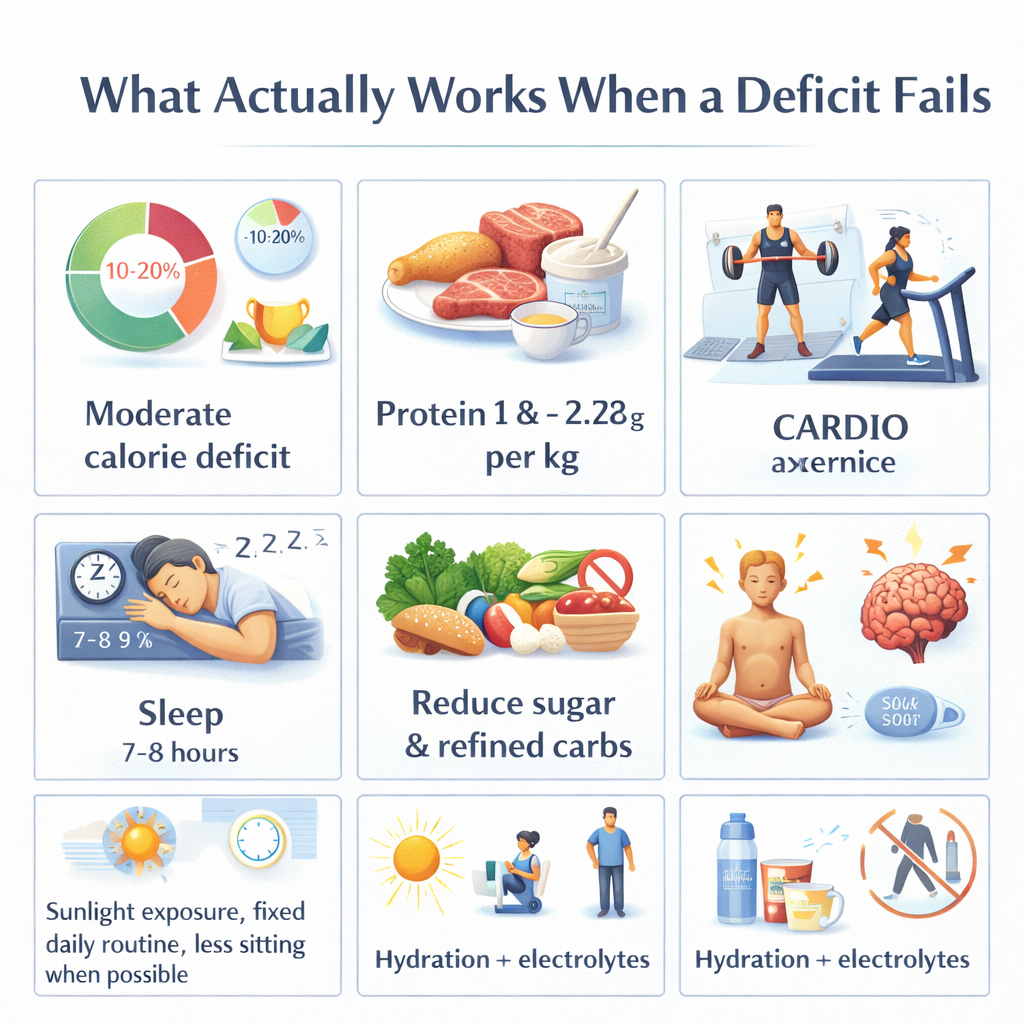
You must flip your body back into fat-loss mode.
✔ Do this:
- Moderate calorie deficit (10–20%, not extreme)
- Protein 1.8–2.2g per kg
- Strength training 3–5× weekly
- NEAT 7,000–10,000 steps/day
- Sleep 7–8 hours
- Reduce sugar and refined carbs (insulin control)
- Stress reduction (cortisol control)
- Sunlight exposure, fixed daily routine, less sitting when possible
- Hydration + electrolytes
Optional intelligent support:
- Stimulant fat burners during workout windows
- Non-stimulant fat burners for hormone + metabolism support
- Caffeine + L-carnitine stacks for fat oxidation during activity
- Craving control supplements for late-evening hunger
Who Benefits Most from Smart Fat Burner Support
Indian users in these phases often benefit indirectly from supplement support:
| Phase | Support Need |
| Gym cut phase | Energy + thermogenesis |
| Evening cravings | Hunger control |
| Stress or caffeine-sensitive | Non-stim metabolic support |
| Plateau phase | Smart cycling/stacking |
| Metabolism slowdown | RMR support |
These products, like Black Python (stimulant) for training energy and SpeedoSlim (non-stimulant) for long-term metabolic balance, but only when paired with habits.
Fat loss is not about eating less forever. It’s about giving your body a reason to burn fat without losing muscle, energy, or metabolic balance.
If hormones, cortisol, or metabolism are blocking your fat loss, don’t fight biology – work with it.
Disclaimer – This content is for informational purposes only and does not constitute medical advice. Dietary supplements are not medicines and are not intended to diagnose, treat, cure, or prevent any disease. Consult a qualified healthcare professional before starting any supplement, diet, exercise program, or medical treatment. Use supplements as directed and as part of a balanced diet and healthy lifestyle. Individual results may vary.